
Whale Watching in Los Cabos: Best Tours, Season Dates and Prices (2026–27)
Hola, fellow travelers! 🐋 Welcome to our refreshed guide to whale watching in Los Cabos for the 2026–27 season.
Every winter, thousands of humpback whales swim down from Alaska to the warm water off Land’s End to mate and give birth. For four months, you can watch 40-tonne animals launch themselves out of the sea with the Arch in the background. It’s the best thing you can do in Cabo between December and April, and it costs less than a dinner out.
At a glance
Best whale watching tours in Cabo San Lucas
These are the boats we’d put our own family on. All three leave from the Cabo San Lucas Marina, run under SEMARNAT permits and have hundreds of recent reviews. Prices are per person and move a little through the season.

Up-Close Small-Group Whale Watching
- Max 10–12 people, marine biologist on board
- Hotel pick-up included
- Fast boat: more time with the whales

Luxury Catamaran Whale Watching
- Stable deck, bathroom, shade
- Appetisers and open bar
- Hydrophone to hear the whales sing

2.5-Hour Whale Watching Tour
- Cheapest licensed option we’d book
- Sails past the Arch and Lover’s Beach
- Good back-up if the small boats sell out
Two more worth knowing: the breakfast whale-watching cruise (chilaquiles, mimosas and a calm morning sea, lovely with kids) and the sunset whale cruise, which pairs peak afternoon activity with the best light of the day. Want the boat to yourselves? Private tours start around USD 400 for the group.
Prefer to book direct? Cabo Expeditions (zodiacs, USD 99 adults / 60 kids, often a pre-season discount), Cabo Adventures (the luxury catamaran) and Cabo Trek (small groups with a marine biologist) are the three local operators we trust most.

When is whale watching season in Los Cabos?
The official season is 15 December to 30 April. Those dates are set by SEMARNAT, Mexico’s environment ministry, for the Cabo San Lucas protected area and Cabo Pulmo, and licensed boats can’t run whale tours outside them. The 2025–26 season closed on 30 April 2026; the next one opens on 15 December 2026.
The whales don’t read the calendar. First humpbacks are usually spotted from the shore in late November, numbers build through January, and from mid-January to mid-March the bay is busy with mothers, calves and competitive groups of males. That’s the sweet spot. By April the animals are heading north again, and you’ll see fewer of them, further apart.
Humpbacks are the main act, but grey whales pass through on their way to the lagoons further north, and most seasons there are a few orca and even blue whale sightings. Add whale sharks in La Paz (our guide) and you’ve got the best marine wildlife winter in North America.
Zodiac or catamaran?
Zodiac / small boat Our pick
- Price
- USD 95–110
- Group
- 8–12 people
- Ride
- Fast, bumpy, some spray
- Best for
- Getting close, photos, anyone 7+
- Verdict
- ✅ The most whale per minute
Catamaran / cruise
- Price
- USD 60–130
- Group
- 30–80 people
- Ride
- Stable, shaded, bathroom on board
- Best for
- Young kids, grandparents, seasick-prone, drinks included
- Verdict
- Easiest, most comfortable option
Both see the same whales; the law keeps every boat at the same distance. The difference is how it feels. On a zodiac you’re at water level and the captain can move fast to where the action is. On a catamaran you trade that for a drink in your hand and a deck that doesn’t bounce.
How much does whale watching cost in Cabo?
Less than most Cabo activities. Expect USD 60–130 per person for a shared 2–2.5 hour tour booked online. Kids (usually 5–11) pay around 40 per cent less, and many boats take under-5s free or not at all, so check. Private charters start around USD 400–500 for a small group. Everyone pays a USD 4 marina dock fee on the day, and hotel pick-up is sometimes an extra USD 15 if it isn’t included.
You’ll also be offered tours by reps on the marina and in resort lobbies, often cheaper. Some are fine; some are unlicensed pangas with no permit, no radio and no insurance. Look for the SEMARNAT flag or sticker on the boat, and when in doubt book one of the operators above.
The rules on the water
Whale watching here is regulated under NOM-131, and the good operators stick to it. It’s why the whales keep coming back.
What to expect on the day
- Check in at the marina. Most tours meet at the Cabo San Lucas Marina 30 minutes before departure. Pay the dock fee, grab a coffee.
- Out past the Arch. Ten minutes along the rocks, past Lover’s Beach and the sea lion colony at Land’s End. Cameras out already.
- Find the blows. The captain and guide scan for spouts. Humpbacks are everywhere from the Pacific side round to the Corridor.
- Watch. Breaches, tail slaps, pec waves, mothers nudging calves. A hydrophone lets you hear the males singing.
- Back by lunch. Morning tours return around 11–12, leaving you a full afternoon on Medano Beach.
What to bring:
Ready to book?
Small-group boats carry 10–12 people and sell out weeks ahead in January and February.

Where to stay for whale watching
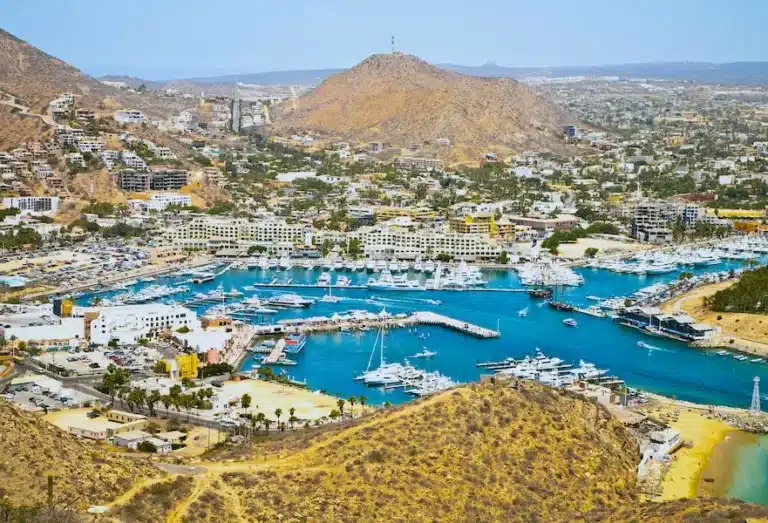
Every tour leaves from the Cabo San Lucas Marina, so staying downtown or on Medano Beach means a five-minute walk instead of a 7 am taxi. Our picks:
Tesoro Los Cabos
Right on the marina boardwalk, two minutes from the tour docks. Good pool, fair prices, Cabo Wabo next door.
Check rates →Bahia Hotel & Beach House
Stylish small hotel a block from Medano Beach with a great beach club and one of our favourite breakfasts in town.
Check rates →Casa Dorada Los Cabos
Suites with kitchens right on Medano Beach, facing the Arch. You can spot whales from the balcony before your tour.
Check rates →More options in our guide to where to stay in Los Cabos.
🚗 Renting a car? It makes it easy to add a shore-watching drive along the Corridor and a day trip to Todos Santos.
Hertz Mexico rates →Frequently asked questions
When is whale watching season in Los Cabos?
The official season runs from 15 December to 30 April, set each year by Mexico’s environment ministry (SEMARNAT). Whales are sometimes spotted from late November, but licensed tours only operate inside the official dates.
What is the best month for whale watching in Cabo?
Mid-January to mid-March. That’s when the most humpbacks are in the bay, mothers are travelling with calves, and you have the best odds of seeing breaching and tail slaps.
How much does a whale watching tour in Cabo cost?
Roughly USD 60–130 per person for a shared 2–2.5 hour tour. Zodiac and small-group biologist tours are around USD 99; the luxury catamaran with open bar is more. Private boats start around USD 400–500. Add a USD 4 marina dock fee paid on the day.
Are sightings guaranteed?
No operator can promise whales, but in January–March it’s rare to come back without a sighting. Several operators offer a free second trip if you see nothing. Check the policy before you book.
Can children go?
Yes. Most boats take kids from 5 or 6; the catamaran and breakfast cruises are the gentlest rides. Zodiacs are bumpier and better for 7+. Expectant mothers are not allowed on most tours.
Zodiac or catamaran?
Zodiac if you want to get close, move fast and don’t mind spray. Catamaran if you want a stable deck, a bathroom, drinks and an easier time with kids or grandparents. Both see the same whales.
Can I see whales from the shore?
Often, yes. From Medano Beach, the Marina breakwater, the lookout at Land’s End and the cliffs along the Corridor you’ll see spouts and sometimes breaches, especially early morning. A boat gets you a hundred times closer.
Make a whale week of it
Whale season is also the best time to be in Baja Sur full stop: dry, warm days, cool nights, and the whole peninsula alive. Pair your Cabo whale tour with:


See every whale tour in Cabo
Compare dates, prices and reviews for the whole season in one place.
Questions about dates or boats? Ask in the comments and we’ll answer. ¡Buen viaje! 🌊



16 Comments